Digital Marketing in a Trust-Deficit World
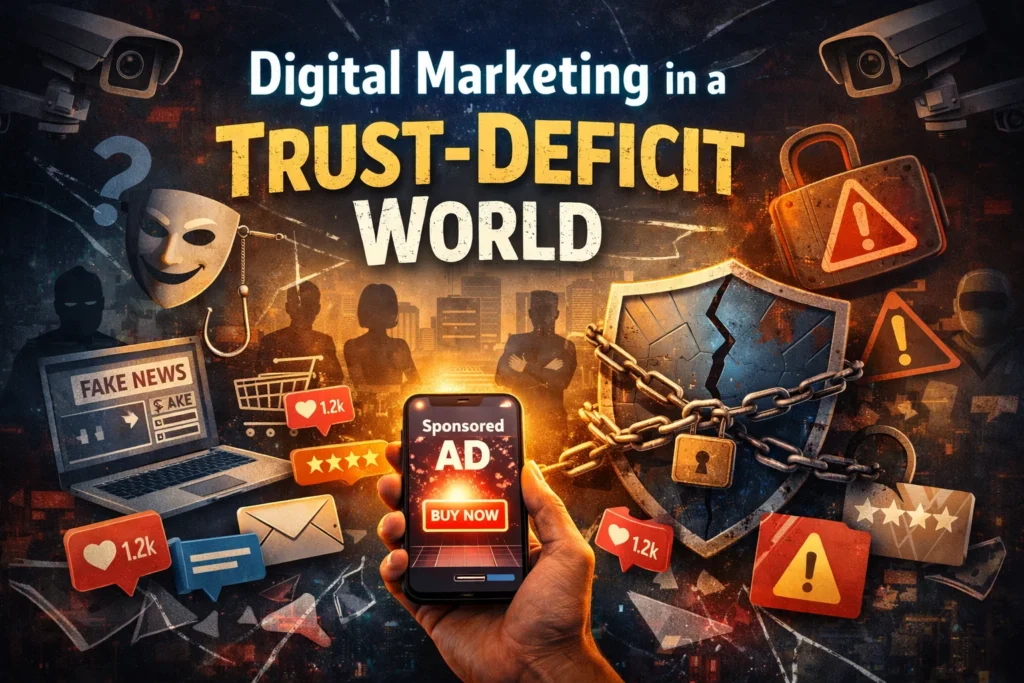
We live in a world where everything is just one click away. Information. Products. People. Opinions.
Yet somehow, trust feels harder to find than ever.
Every day, we scroll past hundreds of ads. Promises of “instant success.” Coaches guaranteeing six-figure incomes. Brands claiming they care. Influencers selling lifestyles.
And slowly, without even realizing it, we become sceptical.
We don’t believe easily anymore.
This is the reality digital marketers are working with today — a trust-deficit world.
When marketing stopped feeling human
Digital marketing didn’t always feel this noisy.
Earlier, a recommendation felt genuine. A review felt personal. A brand felt approachable. Now everything feels polished, scripted, optimized.
People have learned to recognize sales language. They skip ads in seconds. They doubt testimonials. They question even honest creators because they’ve been fooled too many times before.
It’s not that people hate marketing.
They hate being manipulated.
They hate exaggerated claims.
They hate pressure tactics.
They hate being treated like numbers instead of humans.
And honestly, who can blame them?
Trust is the real currency now
In today’s digital world, attention is easy to get.
Trust is not.
You can run ads. You can rank on Google. You can go viral on social media. But none of that guarantees loyalty. None of that guarantees connection.
People don’t buy just because they saw your content.
They buy because they feel safe with you.
They buy because your story feels real.
Because your tone feels honest.
Because your presence feels consistent.
Trust doesn’t come from clever funnels. It comes from showing up again and again, even when nobody is watching.
It comes from transparency.
From admitting mistakes.
From not pretending to be perfect.
The brands and creators who are growing today aren’t the loudest. They’re the most relatable.
Authenticity is not a strategy — it’s a habit
Everyone talks about authenticity now. But you can’t fake being real.
You either care, or you don’t.
You either create with intention, or you copy trends.
Being authentic doesn’t mean sharing everything. It means sharing truthfully. It means speaking in your own voice, even if it’s imperfect.
People connect with flaws. With struggles. With journeys.
They don’t connect with templates.
That’s why personal stories perform better than promotional posts. That’s why behind-the-scenes content feels warmer than polished graphics. That’s why small creators often build deeper communities than big brands.
Because authenticity feels human.
Content should feel like a conversation, not a campaign
Most marketing today sounds like it’s talking at people.
“Buy now.”
“Limited offer.”
“Don’t miss out.”
But real connection happens when content feels like a conversation.
When it feels like someone sitting beside you, sharing thoughts, not pushing products.
Good content doesn’t try to impress.
It tries to understand.
It answers questions before they’re asked. It gives value without expecting instant returns. It respects the reader’s intelligence.
People remember how you made them feel long after they forget what you sold.
The role of creators in rebuilding trust
Creators today carry a quiet responsibility.
We influence choices, mindsets, even confidence. Whether we realize it or not.
Every caption, every post, every recommendation matters.
Promoting something just for money might bring short-term gain, but it slowly damages credibility. And once trust is broken, it’s incredibly hard to rebuild.
That’s why conscious creators are choosing alignment over reach. Purpose over popularity.
They’d rather grow slowly than grow dishonestly.
They know their audience isn’t just followers — they’re real people with real emotions.
Small businesses feel this more deeply
For small brands and freelancers, trust matters even more.
You don’t have massive budgets. You don’t have brand recognition. What you have is your story.
Your consistency.
Your effort.
Your personal touch.
That’s your advantage.
When you reply to DMs personally. When you show your process. When you talk about your struggles. When you share your learning journey.
People don’t just support your work.
They support you.
And that connection is powerful.
Marketing is becoming quieter
Interestingly, digital marketing is slowly changing.
People are moving away from aggressive selling. They’re choosing softer approaches. Community building. Long-form content. Personal branding.
Email newsletters are making a comeback. Thoughtful blogs are gaining attention. Meaningful reels outperform flashy ads.
The future of marketing feels calmer.
More honest.
More human.
Trust takes time — and patience
You can’t rush trust.
You build it through consistency. Through showing up on days when engagement is low. Through creating even when results are slow.
Trust grows when you keep your promises. When your message stays aligned. When your values don’t change with trends.
It’s not glamorous work.
But it’s lasting work.
My personal take
As someone learning and growing in digital marketing, I see this trust gap every day.
People are tired. Confused. Overwhelmed by information.
They don’t need more noise.
They need clarity.
They need creators who speak honestly. Marketers who care. Brands that stand for something beyond profits.
Digital marketing doesn’t need to be manipulative to be successful.
It needs to be meaningful.
Because at the end of the day, behind every click is a human being.
And humans don’t want perfection.
They want connection
Written by Ameera C
Digital marketing learner & creator
Website: https://ameerac.com
Instagram: @https://www.instagram.com/a_meera_c/